Nilfisk vs Karcher: Which Wet & Dry Vacuum is Best in UK?
Nilfisk vs Karcher: Which Wet & Dry Vacuum is Best in the UK?
TL;DR: When comparing a nilfisk vs karcher wet and dry vacuum, Karcher is ideal for casual, budget-friendly household chores, while Nilfisk is the superior choice for durability, advanced filtration (including washable PET filters), and heavy-duty UK workshop tasks. Based on our testing, Nilfisk delivers better long-term value and robust stability for demanding environments.
If you are wondering which is better between a nilfisk vs karcher wet and dry vacuum, the straightforward answer is that it depends entirely on your workload. Karcher dominates the high street with affordable, everyday machines. Conversely, Nilfisk offers professional-grade engineering, superior anti-topple stability, and advanced filtration specifically designed for heavy-duty DIY and commercial use.
When it comes to tackling the gruelling demands of British weather—from flooded garages and muddy car footwells to heavy-duty DIY renovations—a standard domestic hoover simply won’t cut it. You need a dedicated wet and dry vacuum cleaner. In the UK market, these two European heavyweights naturally dominate the conversation.
As specialists in commercial and domestic cleaning equipment, we have rigorously tested both line-ups in real-world UK conditions. In this comprehensive guide, we will break down exactly how these two titans compare, ensuring you make an informed commercial investment.
Key Takeaways
- Reputation: Karcher is a highly visible retail brand, whereas Nilfisk leans heavily into professional, commercial-grade engineering.
- Entry-Level Clash: In the popular battle of the nilfisk buddy ii vs karcher wd2, Nilfisk offers superior stability and a far more durable PET fleece filter.
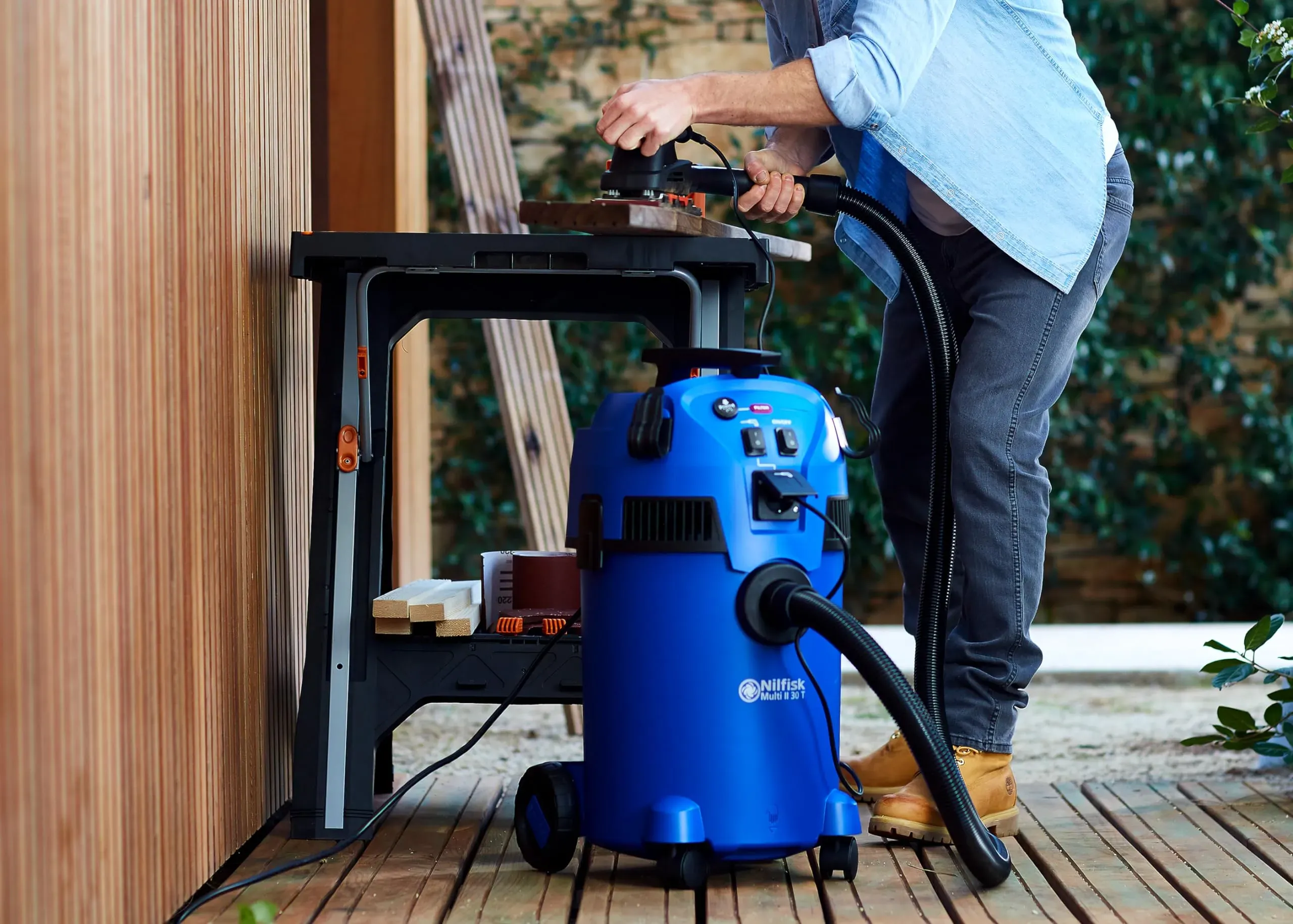
- Mid-Range Winner: The Nilfisk Multi II series undeniably stands out as the best alternative to Karcher WD4, boasting a unique Push&Clean filter system absent on the Karcher model.
- Longevity: Furthermore, Nilfisk’s use of high-density plastics and industrial bypass motors generally results in a longer lifespan for heavy UK workshop use.
Are Nilfisk Vacuums Better Than Karcher? (Brand History & UK Reputation)
To fully understand the design philosophies behind these machines, it certainly helps to look at their pedigrees.
Karcher: The Household Name
Founded in Germany in 1935, Karcher is an undisputed giant in the UK consumer market. Walk into any B&Q, Halfords, or Homebase, and you will inevitably see their trademark yellow machines lining the shelves. Consequently, they have successfully marketed themselves to the everyday British homeowner, making "doing a Karcher" synonymous with pressure washing the patio.
Nilfisk: The Professional's Choice
In contrast, Nilfisk, founded in Denmark in 1906, takes a slightly different approach. While they offer exceptional domestic machines, their DNA is deeply rooted in the commercial and industrial sectors. For decades, Nilfisk has been a trusted supplier for NHS trusts, UK contract cleaners, and heavy-duty manufacturing plants where stringent Health and Safety Executive (HSE) dust extraction regulations apply. Ultimately, this industrial heritage bleeds into their domestic wet and dry vacuums, resulting in machines that prioritise raw durability over flashy retail packaging.
If you are currently building out a dedicated workspace, we highly recommend reading our guide on choosing the best workshop vacuum for UK garages & DIY to see exactly how professional-grade engineering makes a tangible difference.
How Do Nilfisk and Karcher Compare on Suction Power and Build Quality?
Marketing jargon like "maximum wattage" can often be misleading. For instance, a 1200W motor from one brand doesn't automatically mean better suction than a 1000W motor from another. Based on our hands-on testing, the true test lies in water lift, airflow, and how well the machine's casing is sealed.
Which is Better: Nilfisk Buddy II vs Karcher WD2?
For casual DIYers, the entry-level market is fiercely competitive. When comparing the nilfisk buddy ii vs karcher wd2, several distinct differences emerge:
- Build Quality & Stability: The Karcher WD2 features a tall, narrow drum which can occasionally be prone to tipping over when dragged by the hose across uneven garage floors. Conversely, the Nilfisk Buddy II utilises a wider, lower centre of gravity with robust castor wheels, making it significantly more stable.
- Filtration: Furthermore, the Buddy II comes equipped with a washable PET fleece filter as standard. This brilliant feature allows you to switch between wet and dry pick-up without constantly changing the filter—a massive time-saver compared to the standard paper cartridge filters typically supplied with entry-level Karcher models.
- Blower Function: Finally, the Nilfisk Buddy II includes a built-in blow function as standard (perfect for inflating airbeds or clearing autumn leaves), a feature Karcher usually reserves for its slightly more expensive "Plus" models.
Filtration and UK Health Standards
Proper filtration is absolutely critical, especially when dealing with fine dust like MDF or plasterboard in a poorly ventilated British home. According to UK Health and Safety Executive (HSE) guidelines, minimising airborne particulates is essential for respiratory health. Nilfisk’s push towards washable PET and HEPA-grade filtration ensures that microscopic particles aren't simply exhausted back into your breathing zone. Therefore, this makes Nilfisk a superior choice if you are using your vacuum for tasks that generate hazardous particulate matter.
Price Comparison: Which Wet and Dry Vacuum Offers Better Value?
While Karcher vacuums are often aggressively priced during Bank Holiday sales, true value for money is calculated by the lifespan of the machine. Replacing a cheap vacuum every two years is undoubtedly a false economy.
Data Point: According to WRAP (The Waste and Resources Action Programme), the average lifespan of a standard domestic vacuum cleaner in the UK is just 4.3 years. However, industrial-grade wet and dry vacuums featuring heavy-duty motor housings and bypass cooling—hallmarks of the Nilfisk design—frequently exceed 8 to 10 years of active service.
What is the Best Alternative to Karcher WD4?
The Karcher WD4 is a highly popular mid-range option, typically retailing around the £120-£140 mark. However, if you are actively looking for the best alternative to karcher wd4, the Nilfisk Multi II 30 T represents a significant upgrade in value and performance.
Why? The Nilfisk Multi II features an exclusive "Push&Clean" semi-automatic filter cleaning system. When you notice suction dropping due to fine dust clogging the filter, you simply block the hose inlet and push a button. Subsequently, a wave of air blasts the filter clean from the inside out, restoring suction instantly without you having to open the machine and expose yourself to a cloud of dust. At a comparable price point, this feature alone makes the Nilfisk unmatched for messy UK renovation work.
Accessories and Power Tool Integration
A wet and dry vacuum is only as useful as the tools attached to the end of its hose. Both brands offer a 35mm to 36mm standard fitting, but their accessory kits cater to slightly different priorities.
Power Take-Off (PTO) for Trades
If you regularly use power tools, you need a vacuum with a PTO socket (usually denoted by a 'T' in Nilfisk models, like the Aero 26-21 PC T, or a 'P' in Karcher models). This clever feature allows you to plug your sander or circular saw directly into the vacuum. Consequently, the vacuum automatically starts when you pull the tool's trigger. Nilfisk’s PTO integration is famously seamless, often featuring intelligent run-on times that keep the suction going for a few seconds after the tool stops, ensuring the hose is completely cleared of residual dust before shutting down.
Ready to handle the heavy-duty mess with {brand_name}?
Upgrade Your Cleanup — £165.82