Dust Extractor Workshop Vacuum UK: A Sole Trader Guide
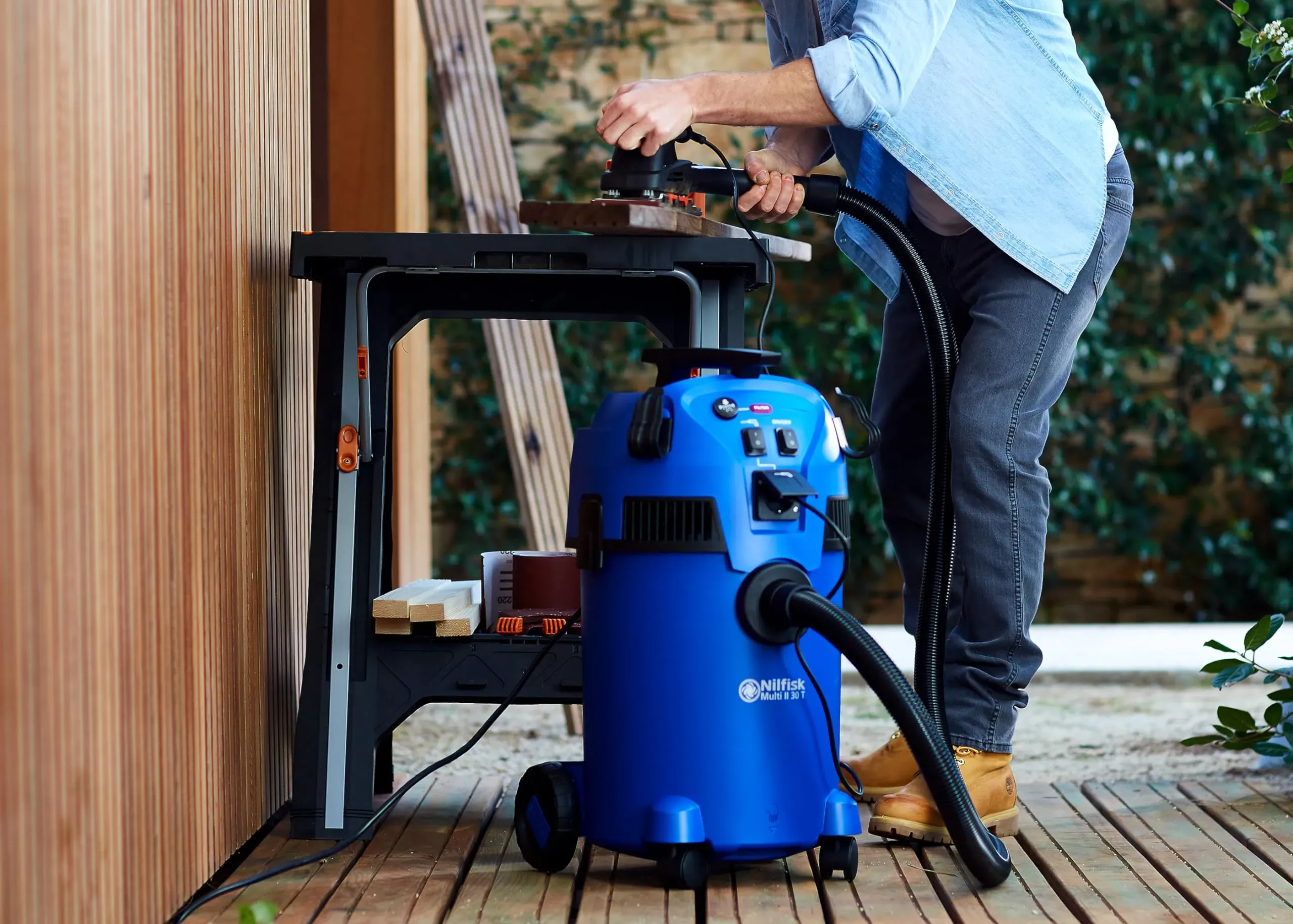
Short answer: a dust extractor workshop vacuum UK sole traders want is really two things at once: a machine that auto-starts off your power tool and one you can clear on the spot when the filter loads. The Nilfisk Multi II 30L T does both, with a tool take-off socket, Push-to-Clean and a 30L tank at £400.00. Be honest about its class, though: it is a general wet and dry workshop vacuum, not a certified M or H class extractor for hazardous dust.
For a sole trader or handyman, a vacuum is not housekeeping, it is billable time. This guide covers what a workshop wet and dry vacuum needs to do on site, where the tool socket and filter cleaning earn their keep, and the honest boundary between a general extractor and certified dust control.
Tool take-off and auto-start save you movements
The feature that changes your day is the power-tool socket. Plug a sander or router into the Nilfisk Multi II 30L T and the vacuum starts automatically with the tool, then runs on for a moment to clear the hose. No more bending to switch the vacuum on and off between cuts, and far less dust settling across a client site to sweep up afterwards.
Push-to-Clean keeps you working
Fine dust loads a filter fast, and lost suction mid-cut is dead time. Push-to-Clean lets you knock the dust off the filter and restore airflow on the spot, without stripping the drum. Combined with a 30-litre tank you empty before it is two-thirds full, that keeps a job moving instead of stopping to service the machine.
The honest bit: dust class matters
This is where marketing often goes quiet, so we will be plain. The Multi II 30L T is a capable general wet and dry workshop vacuum with a tool socket. It is not an M or H class certified dust extractor. For regulated hazardous dust, including silica from masonry and fine hardwood dust, you need class-rated extraction and the right respiratory protection, not a general vacuum. Use this machine for site housekeeping, chip and sawdust capture and tool extraction, and step up to certified equipment where the dust demands it. No vacuum should be sold as a shortcut around dust safety.
Corded reliability and downtime cost
A sole trader cannot afford a tool that fades. A corded 1400W drum runs all day at steady airflow, where a cordless unit would need battery swaps in the middle of extraction. When you price a machine, factor the cost of stoppages, not just the sticker: a vacuum that keeps running and clears its own filter is cheaper over a year than a lighter one that keeps stopping.
Where the Multi II 30L T fits
At £400.00 with free UK next-day delivery, 30-day returns and a 12-month warranty with UK support, it suits a trade or serious DIY user who wants tool take-off, easy filter cleaning and a big tank in one corded machine, within the honest limits above. For a home garage angle on the same machine, read the garage vacuum cleaner UK guide; for the wider category, the best wet and dry vacuum UK guide.
Shop the Nilfisk Multi II 30L T — £400.00
Frequently asked questions
Is a wet and dry vacuum the same as a certified dust extractor?
No, and it is important not to confuse them. A wet and dry workshop vacuum with a tool socket captures general sawdust and site debris well, but it is not an M or H class certified dust extractor. For hazardous dust such as silica or hardwood dust you need class-rated extraction and proper respiratory protection.
Does the power-tool take-off start the vacuum automatically?
Yes. Plug a sander or router into the socket on the Nilfisk Multi II 30L T and the vacuum starts with the tool, then runs on briefly to clear the hose. That captures chips and dust at source and saves you switching the vacuum on and off by hand all day.
How do I restore suction if the filter clogs on site?
Use Push-to-Clean. It knocks the loaded dust off the filter and restores airflow without stripping the machine down, so you are not losing billable time mid-job. Empty the drum before it is more than two-thirds full to keep suction steady.
What dust can a workshop wet and dry vacuum safely handle?
General sawdust, chips, grit and site mess in dry mode with a fine filter, plus liquids in wet mode. It is not suitable as your only control for regulated hazardous dust; treat it as site housekeeping and tool extraction, and use certified equipment and protection where the dust demands it.