How to Unblock a Drain with a Wet and Dry Vacuum
Short answer: you can often unblock a drain with a wet and dry vacuum by sealing it over the plughole on wet mode to pull a shallow clog back up, and the same machine is the fastest way to lift standing water from a washing-machine leak before it soaks into the floor. Always remove the fleece dust bag and fit the wet filter first, let the float shut-off protect the motor, and know when to stop and call a plumber.
When water is pooling on the kitchen floor or backing up in a sink, towels and a mop are painfully slow, and every minute the water is creeping towards the skirting and the floorboards. A wet and dry vacuum is a genuinely useful emergency tool here, both for clearing a shallow blockage and for lifting a leak before it does damage. Here is how to use one safely, and where its limits are.
First, set the machine up for water
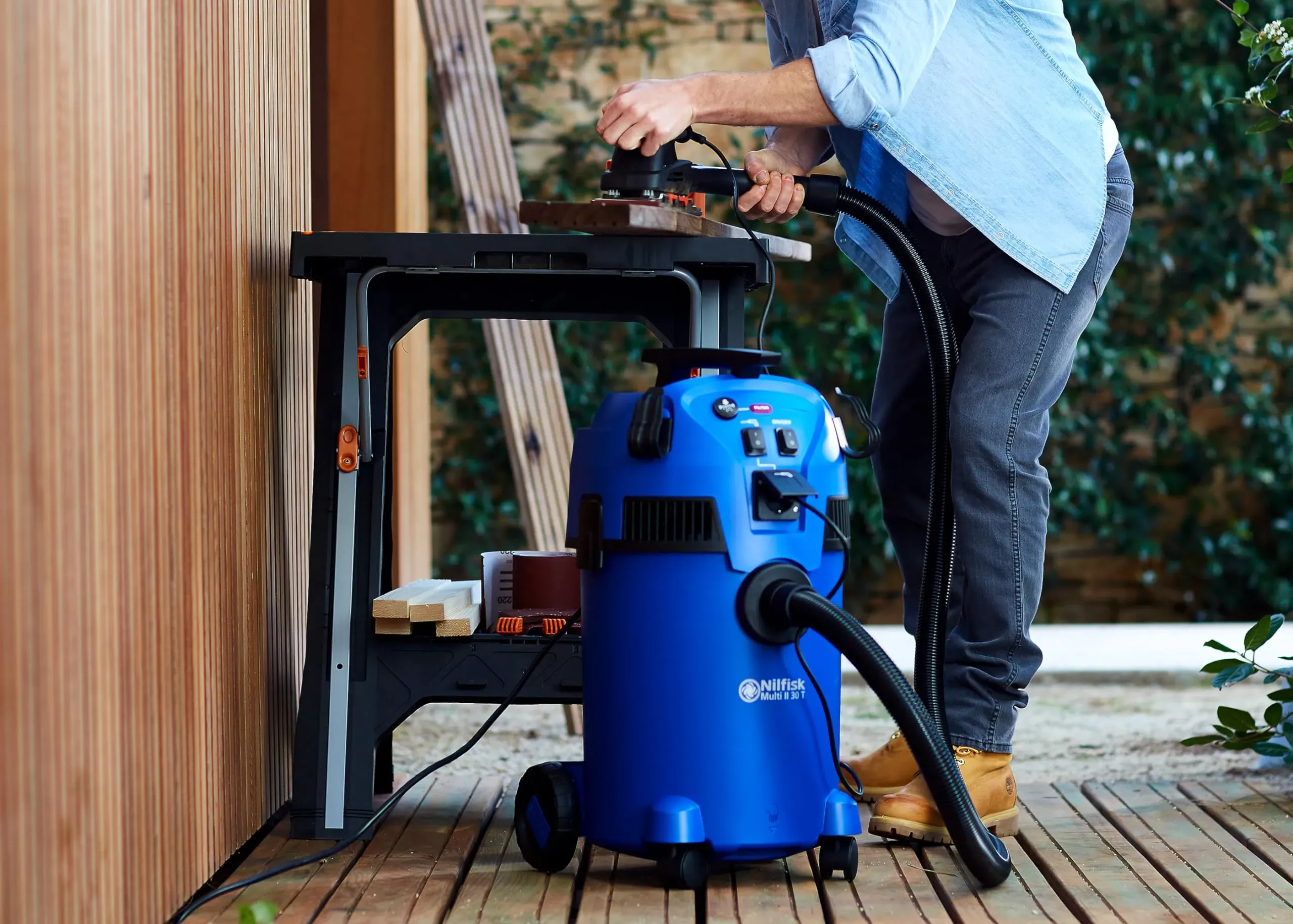
Before anything, remove the fleece dust bag and fit the wet filter. Vacuuming water with the dry bag in place is the number one mistake and can wreck the machine. With the wet setup in place, the float shut-off will stop suction automatically when the drum is full, so you will not overfill it. The Nilfisk Multi II 30L T has a 30-litre drum, so you can lift a lot of water before you stop to empty.
Unblocking a sink or shallow drain
- Clear standing water from the sink with the vacuum so you can work.
- Remove any strainer, and block the overflow with a damp cloth to hold the seal.
- Press the hose firmly over the plughole to make as tight a seal as you can, using an old cloth to pack around it.
- Run the vacuum on wet mode. The suction pulls the clog back up towards you rather than pushing it deeper.
- Repeat a few times. When flow returns, flush through with water to confirm it is clear.
This works best on shallow blockages of grease, hair and food debris close to the plughole. It will not shift a deep blockage far down the mains.
Dealing with a washing-machine leak or spill
If the emergency is water rather than a blockage, deal with the water first. A wet and dry vacuum lifts standing water from a floor far faster than towels, which matters because the longer it sits, the further it wicks into skirting and under flooring. Work from the edges inwards, empty the drum as needed, and get the area dry and airing. Then find the cause: a loose or perished hose is common after a washing-machine leak, but if water keeps returning, call a professional.
After the job
Empty and rinse the drum promptly, then let the washable filter dry before you switch back to dry vacuuming. Standing waste water left in the tank will smell, and a damp filter used for dry work will clog.
Know when to stop and call a plumber
A wet and dry vacuum is for surface water and shallow clogs, not for everything. Stop and call a qualified plumber or drainage engineer if the blockage is deep in the mains, if there is any sewage or foul water, if water keeps coming back, or if you see structural damp. Clearing the water quickly buys you time; it does not replace a proper repair.
At £400.00 with free UK next-day delivery, 30-day returns and a 12-month warranty with UK support, a 30L wet and dry drum earns its place as the machine you reach for when water needs to be gone in minutes, and then goes back to garage and car duty the rest of the year.
Choosing a machine for the household? See the best wet and dry vacuum UK guide.
Shop the Nilfisk Multi II 30L T — £400.00
Frequently asked questions
Can you unblock a drain with a wet and dry vacuum?
Often, yes, for shallow blockages in a sink or waste pipe. By creating a tight seal over the plughole and using the vacuum on wet mode, you can pull a clog back up rather than pushing it deeper. It will not clear a deep mains blockage, and it is not for sewage.
Do I need to remove the dust bag before sucking up water?
Yes. Always remove the fleece dust bag and fit the wet filter before any liquid pick-up. Vacuuming water with the paper or fleece bag in place is the most common mistake and can damage the machine. The float shut-off then stops suction when the drum is full.
Can a wet and dry vacuum clear a washing machine leak?
Yes, for the water. A wet and dry vacuum is one of the fastest ways to lift standing water from a washing-machine leak before it soaks into skirting and flooring. Deal with the water first, then find and fix the cause, and call a professional if the leak continues.
When should I stop and call a plumber?
Stop if the blockage is deep in the mains, if there is any sewage or foul water, if water keeps returning, or if you smell gas or see structural damp. A wet and dry vacuum handles surface water and shallow clogs; anything beyond that needs a qualified plumber or drainage engineer.