Best Wet and Dry Vacuum UK: 2026 Buyer’s Guide
Best Wet and Dry Vacuum UK: 2026 Buyer’s Guide
If you have ever tried to clear up a burst washing machine hose, plaster dust from a weekend DIY job, or muddy water in the boot after a rainy football run, you will already know the problem: a normal hoover is not built for it. That is exactly where a wet and dry vacuum comes in. For UK households, garages, home workshops and car valeting, the right machine can save time, protect your home, and deal with messes your standard vacuum simply cannot handle.
At Nilfisk WDV, our view is simple: Tackle the Mess Your Normal Hoover Can't Handle. A versatile 30L wet and dry vacuum is often the sweet spot for British buyers who want one machine for car valeting, garage DIY, and indoor emergency spills without stepping into bulky commercial equipment that is overkill for home use.
This guide is designed to help you choose the best wet and dry vacuum UK buyers should consider in 2026. We will cover what wet and dry vacuums do, who needs one, how to compare models, whether Nilfisk is better than Karcher for wet and dry cleaning, and how to choose the right size, power source and price point. We will also look at indoor safety, UK-specific buying considerations, and the features that matter most in real-world use.
Key Takeaways
- A wet and dry vacuum is ideal for liquid spills, DIY debris, garage floors, workshops and car valeting.
- For most UK homes, a 30L model offers the best balance of capacity, portability and versatility.
- Mains-powered machines remain the strongest choice for longer cleaning sessions and heavier debris.
- When comparing models, focus on suction, airflow, filtration, drum size, hose quality, cable length and accessory range.
- Wet and dry vacuums can be used indoors safely if you follow the manufacturer’s instructions and use the correct filter setup.
- If you want one machine for indoor emergency spills, garage DIY and car cleaning, a quality Nilfisk wet and dry vacuum is a strong all-round choice.
What Is a Wet and Dry Vacuum and Who Needs One in the UK?
A wet and dry vacuum is a specialist cleaning machine designed to pick up both dry debris and liquids. Unlike a standard household vacuum cleaner, it uses a drum collection system, more robust motor protection, and a design that allows it to handle tougher environments such as garages, workshops, utility rooms and vehicles.
In practical terms, that means it can collect sawdust, rubble fragments, mud, leaves, pet mess, rainwater, accidental spills and car interior debris using one machine. For many UK buyers, that flexibility is the main reason to choose one.
Who benefits most from a wet and dry vacuum?
- Homeowners dealing with indoor spills, blocked utility areas or messy renovations.
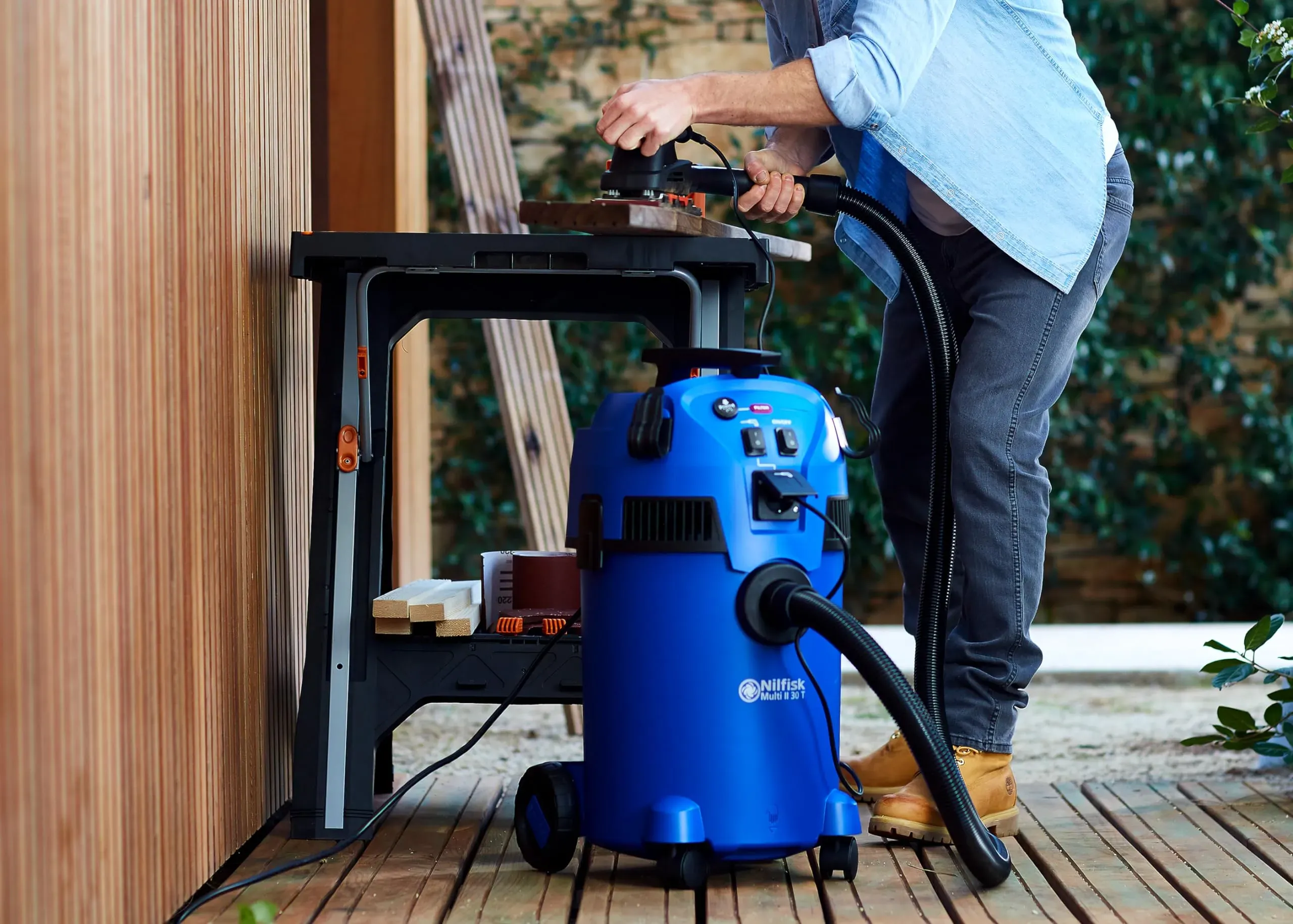
- DIY enthusiasts cleaning up plaster dust, wood shavings, masonry debris and workshop floors.
- Car owners and valeters wanting stronger suction and better versatility than a normal domestic hoover.
- Garage users tackling mud, leaves, damp patches and fine dust.
- Small trades and mobile professionals who need reliable cleaning between jobs.
UK homes increasingly need more flexible cleaning equipment. According to the English Housing Survey published by the UK Government, owner occupation remains the largest tenure type in England, accounting for around 65% of households in recent years. More owner-occupiers often means more DIY, more home maintenance, and more demand for tools that can deal with renovation mess and emergency clean-ups. Source: GOV.UK, English Housing Survey.
The appeal is especially strong in British settings where outdoor conditions create muddy porches, wet garages and dirty car interiors for much of the year. If you live in a semi-detached house with a garage, have children or pets, or regularly carry tools, sports kit or garden waste in the car, a wet and dry vacuum is not a niche purchase. It is a practical one.
How to Choose the Best Wet and Dry Vacuum for Home, Garage and Car Use
If you are searching for the best wet and dry vacuum cleaner UK buyers can rely on, it helps to ignore vague marketing claims and focus on how the machine will actually be used. The best model for a small flat is not the same as the best one for a double garage workshop or mobile car valeting setup.
Start with your main cleaning jobs
Ask yourself which of these tasks matter most:
- Cleaning emergency indoor spills
- Vacuuming dust and debris after DIY
- Keeping a garage or shed clean
- Valeting one or more cars regularly
- Collecting wet leaves, muddy footprints or utility room mess
If you need one machine for all of the above, versatility matters more than chasing the highest possible wattage figure. In our experience, UK buyers get better long-term value from a well-built, mid-capacity machine with strong suction, durable accessories and practical storage than from a cheaper model with inflated specifications but weaker real-world performance.
Prioritise suction and airflow over headline motor claims
Many buyers focus first on motor wattage, but suction performance and airflow matter more. A well-engineered vacuum with efficient airflow can outperform a higher-watt machine that wastes energy or loses suction under load. This is especially important for garage debris, coarse dirt and car valeting, where consistent pick-up matters more than labelling.
Think about where you will store and use it
A wet and dry vacuum should be easy to wheel, carry and store. For British homes, that means checking:
- Whether it fits in a garage corner or utility cupboard
- Whether the hose is long enough to reach around a car
- Whether the cable length suits a driveway or indoor spill response
- Whether accessories clip onto the machine for tidy storage
For many households, a 30L machine hits the practical middle ground. It is large enough for meaningful wet and dry work, but still manageable for domestic storage and movement.
Is Nilfisk Better Than Karcher for Wet and Dry Cleaning?
This is one of the most common comparison questions from UK buyers. Both Nilfisk and Karcher are established names, and both offer wet and dry vacuum options. The right answer depends on what you value most, but there are meaningful differences.
Where Nilfisk stands out
Nilfisk has a long-standing reputation in professional and industrial cleaning equipment, and that heritage matters. Buyers looking for dependable suction, durable build quality and strong everyday versatility often prefer Nilfisk because the machines feel designed for regular use rather than occasional novelty.
For home users, that professional DNA translates into practical benefits:
- Strong suction for heavier debris and valeting work
- Robust construction suited to garages and workshops
- Reliable wet pick-up for spills and emergency use indoors
- Usable accessory systems that support varied cleaning jobs
Where Karcher may appeal
Karcher has broad consumer recognition in the UK and often appeals to buyers already familiar with its pressure washers and home cleaning products. Some shoppers may prefer the brand because of local availability or previous ownership.
So, is Nilfisk better than Karcher?
If your priority is a serious all-round wet and dry cleaner for car valeting, garage use, DIY clean-up and indoor spills, Nilfisk is an excellent choice and, for many buyers, the better one. If you want one machine that can comfortably bridge domestic and tougher cleaning tasks, Nilfisk compares very strongly on performance, build quality and value.
Rather than asking which badge is better in the abstract, a smarter question is this: which machine will better handle the mess your normal hoover cannot? For many UK households, that points directly towards a capable Nilfisk 30L wet and dry vacuum.
Can You Use a Wet and Dry Vacuum Cleaner Indoors Safely?
Yes, in most cases you can use a wet and dry vacuum cleaner indoors safely, provided you follow the manufacturer’s instructions and use the machine correctly. This is an important point because many UK buyers ask, can I use a wet and dry vacuum cleaner indoors, particularly after a leak, appliance overflow or DIY job.
Typical indoor uses in British homes
- Clearing water from under a leaking sink
- Cleaning up washing machine or dishwasher overflows
- Removing debris after drilling, sanding or minor renovation work
- Tidying utility rooms, porches and tiled floors
- Cleaning car mats or boots indoors in a garage space
Indoor safety points to follow
- Read the manual first. Not all configurations are suitable for wet and dry use at the same time. Filter setup matters.
- Use the correct filter or no filter where specified for wet pick-up. Using the wrong filter can reduce performance or damage the machine.
- Do not vacuum hazardous dust unless the machine is rated for it. Fine harmful dusts may require a specific dust class machine.
- Check cables and plugs before use. This is especially important around wet areas.
- Empty and clean the drum after wet use. This helps prevent odours and keeps the vacuum ready for next time.
In UK settings, safety and hygiene are especially important in homes with children, elderly relatives or clinically vulnerable people. While the NHS does not issue product-specific advice on wet and dry vacuums, general household hygiene principles still apply: remove standing water quickly, reduce damp where possible, and maintain clean indoor environments. Prompt spill clearance can also help reduce slip risks and limit moisture-related problems.
For normal household use, a quality wet and dry vacuum is often one of the safest and fastest ways to deal with indoor water incidents because it removes liquid far more efficiently than towels or a standard vacuum ever could.
Best Uses: Spills, DIY Dust, Garages, Workshops and Car Valeting
The reason wet and dry vacuums continue to grow in popularity is simple: they solve multiple cleaning problems with one machine. If you want the best wet and dry vacuum UK households can use across different spaces, it should handle the following jobs well.
Emergency spills and water pick-up
This is one of the biggest advantages over a standard vacuum. Burst pipes, knocked-over mop buckets, leaking radiators, shower tray overflows and washing machine mishaps all require fast action. A wet and dry vacuum can remove standing water quickly, helping you minimise disruption and reduce the risk of longer-term damp issues.
DIY dust and renovation debris
DIY creates the sort of mess ordinary vacuums hate: fine plaster dust, wood shavings, masonry residue, screws, crumbs of filler and gritty dirt from footwear. A proper wet and dry vacuum is much better suited to these materials, especially in garages, hallways and rooms under renovation.
That said, always check the machine’s intended use and filtration capability. For particularly fine or hazardous dust, use the correct rated equipment and follow UK health and safety best practice.
Garage and workshop cleaning
For anyone asking what is the best vacuum for a garage UK, the answer usually involves a robust wet and dry model. Garages collect a challenging mix of dry and damp dirt: leaves, mud, sawdust, grit, cobwebs, metal fragments and occasional spills. A domestic upright vacuum is usually unsuitable. A wheeled drum-style machine with strong suction and a durable hose is much more practical.
Car valeting
Wet and dry vacuums are particularly useful for cars because interiors contain mixed debris: crumbs, grit, pet hair, wet footwell dirt and damp boot linings. A versatile vacuum with crevice tools and strong suction can dramatically improve cleaning speed. If you regularly clean family cars, work vans or 4x4s, this is one of the strongest reasons to invest.
Utility rooms, sheds and outdoor-adjacent spaces
British homes with utility rooms, conservatories, boot rooms and garden access often need a machine that can cope with half-indoor, half-outdoor mess. This is where a wet and dry vacuum genuinely earns its keep year-round.
Capacity Guide: Why 20L, 30L and Larger Drums Matter
Drum size affects more than just how much the machine holds. It also influences portability, emptying frequency, storage practicality and suitability for different jobs. This is a crucial part of any wet and dry vacuum buying guide UK shoppers should read before purchasing.
20L models
A 20L machine is often suitable for smaller homes, lighter DIY use and occasional car cleaning. It tends to be easier to store and lift, but you may need to empty it more often, especially when collecting water or larger debris.
Best for: occasional use, smaller properties, light indoor spill response.
30L models
For many UK buyers, 30L is the sweet spot. It provides noticeably more capacity for garage debris, repeated car valeting and meaningful wet pick-up without becoming too cumbersome for home use. This is why the Nilfisk WDV 30L proposition is so compelling: it is large enough to be genuinely useful, but still practical for domestic settings.
Best for: homeowners wanting one machine for car valeting, garage DIY and indoor emergency spills.
Larger drum models
Above 30L, you move closer to workshop and trade territory. These machines are useful if you clean large areas frequently or handle substantial debris volumes, but they can be heavier, harder to store and less convenient for quick jobs around the house.
Best for: larger workshops, repeated heavy-duty use, bigger commercial spaces.
Why capacity matters in real life
- Larger drums mean fewer interruptions during clean-up.
- Smaller drums are easier to carry upstairs or store in tighter spaces.
- Water pick-up fills drums faster than dry debris, so capacity matters more for spill response.
- A family garage and two-car household often benefits from 30L over 20L.
Mains Powered vs Cordless Wet and Dry Vacuums in British Homes
There is no universal winner here, but for most buyers seeking the best wet and dry vacuum cleaner UK homes can depend on, mains-powered models still make the most sense.
Mains-powered advantages
- Longer uninterrupted cleaning sessions
- Typically stronger and more consistent suction
- Better suited to garages, workshops and full car valets
- No battery degradation over time
If you are cleaning a driveway-adjacent garage, a utility room after a leak, or multiple vehicles in one session, mains power is usually the better option.
Cordless advantages
- Greater portability
- Easier use in places without nearby sockets
- Convenient for smaller, faster jobs
The trade-off is runtime, and often reduced power compared with a good corded machine. In the UK, where many garages and sheds may have limited socket access, cordless can sound appealing. However, if performance is the top priority, mains-powered machines generally remain the stronger long-term choice.
For the majority of homeowners, a corded 30L wet and dry vacuum delivers the best balance of power, reliability and value.
Price Guide in £: What to Expect at Entry, Mid and Premium Levels
Wet and dry vacuums in the UK span a wide price range. The key is to understand what you are getting for your money, and where spending more genuinely improves results.
Entry level: roughly £50 to £90
At this level, you will find basic machines suitable for occasional spills and light debris. They can be useful for infrequent use, but compromises often include shorter hoses, less robust accessories, lower suction stability and smaller drums.
Good for: light domestic use, budget-conscious buyers.
Mid range: roughly £90 to £180
This is where many of the best-value machines sit. Here you are more likely to find stronger build quality, better suction, more practical capacity and accessories that make car cleaning and garage use genuinely easier. For most UK households, this is the most sensible buying band.
Good for: mixed home, garage and car use; frequent DIY clean-up; better long-term value.
Premium: £180 and above
Premium models may offer advanced filtration, stronger construction, specialist features or larger capacities. They can be excellent, but not every buyer needs them. If your use is domestic rather than trade-heavy, a strong mid-range machine often delivers everything you need.
Good for: very frequent use, specialist cleaning needs, workshop-level performance.
What should you expect from a quality 30L machine?
You should expect dependable suction, easy wet and dry changeover, good hose reach, sensible accessory storage, stable wheels, a durable drum and a reputable manufacturer with established cleaning expertise. That is where a Nilfisk model can represent strong value, particularly if you want one machine that covers car valeting, garage DIY and indoor emergency spills without compromise.
Top Features to Compare Before You Buy in the UK
If you are comparing models side by side, these are the features that matter most. They are more useful than generic “best seller” labels and will help you make a better commercial buying decision.
1. Suction performance
Look for strong, consistent suction suited to both coarse debris and finer dirt. Real usability matters more than headline wattage.
2. Drum capacity
Choose based on your actual use. For many homes, 30L is ideal. Smaller models suit lighter use; larger models suit workshops and trade settings.
3. Hose and cable length
Short reach is one of the most frustrating weaknesses in cheaper machines. For car valeting and garage use, longer reach saves time and effort.
4. Filtration system
Good filtration helps protect the motor and manage dust better. Always check whether different filters are needed for wet and dry modes.
5. Accessory range
Crevice tools, floor nozzles and brush heads all improve versatility. If you want to clean cars properly, accessories matter a great deal.
6. Build quality
Check the wheels, latches, hose fittings and drum material. Garage and workshop environments are harder on equipment than living rooms.
7. Ease of emptying
A machine that is awkward to empty will become annoying quickly, especially after wet clean-up.
8. Storage and footprint
British homes rarely have endless storage. A machine with tidy onboard storage and a sensible footprint is easier to live with.
9. Brand credibility and support
This is an important E-E-A-T factor for buyers. Choose brands with genuine cleaning expertise, established track records and clear support. Nilfisk has long-standing authority in cleaning technology, which gives buyers more confidence than unproven budget brands.
10. Intended use and compliance
Always buy for the task you need. If you are dealing with specialist dust types, check UK regulations and use equipment with the correct classification where relevant. A household wet and dry vacuum is excellent for general mess, but should not be treated as a substitute for specialist extraction equipment in regulated environments.
Final Verdict: Which Wet and Dry Vacuum Is Best for Your Needs?
The best wet and dry vacuum in the UK is not necessarily the biggest, cheapest or most heavily advertised. It is the one that fits the way you actually live and clean.
If you want a machine for occasional light use in a small property, an entry-level compact model may be enough. If you need workshop-scale capacity every day, a larger premium unit may be justified.
But for the majority of UK homeowners, one specification stands out as the best all-round choice: a mains-powered 30L wet and dry vacuum from a reputable cleaning brand. It offers enough capacity for serious spills, enough performance for garage and DIY use, and enough versatility for regular car valeting without becoming impractical to store or move.
That is why the Nilfisk WDV approach is so compelling. It is built around the real messes British households face: wet floors, dirty garages, messy cars and the sort of DIY clean-up your normal hoover simply cannot manage. If you want one dependable machine to cover all of that, a Nilfisk 30L wet and dry vacuum is a very strong answer.
Why Buyers Trust Nilfisk for Wet and Dry Cleaning
When making a commercial purchase decision, trust matters. Buyers want evidence that a brand understands the job, stands behind its products and has real expertise in cleaning equipment. Nilfisk brings decades of experience in professional cleaning technology, and that heritage carries through into practical domestic wet and dry solutions.
From our perspective, the most important test is not whether a machine looks impressive on a product page. It is whether it performs when you are dealing with muddy garage water, plaster dust after drilling, or a car interior that needs proper suction rather than a quick once-over. That practical, real-world usefulness is exactly what UK buyers should prioritise.
Expert view: If you need one machine for home spills, garage clean-ups and car valeting, buying from a specialist cleaning brand with a proven track record is usually the smarter long-term decision than choosing a low-cost generalist model.
Ready to Tackle the Mess Your Normal Hoover Can’t Handle?
If you are looking for the best wet and dry vacuum UK buyers can use for car valeting, garage DIY and indoor emergency spills, a 30L Nilfisk WDV is built for exactly that job.
Explore the product and see how a versatile 30L wet and dry vacuum can make everyday clean-up faster, easier and more reliable.
Shop the Nilfisk WDV 30L wet and dry vacuum at nilfiskwdv.co.uk
Frequently Asked Questions
What is the best wet and dry vacuum in the UK for home and garage use?
For most buyers, the best option is a mains-powered 30L wet and dry vacuum from a reputable specialist brand. It offers enough capacity for spills and garage debris, while remaining practical for home storage and car cleaning. Nilfisk is a strong choice for this type of all-round use.
Can I use a wet and dry vacuum cleaner indoors?
Yes, provided the machine is designed for indoor use and you follow the manufacturer’s instructions. Use the correct filter configuration, inspect cables and plugs before use, and clean the drum after wet pick-up. They are particularly useful for appliance leaks, utility room spills and renovation dust.
What is the best vacuum for a garage in the UK?
A garage vacuum should have strong suction, a durable hose, stable wheels and enough capacity to handle mixed debris such as dust, leaves, grit and damp dirt. For most UK garages, a 30L wet and dry vacuum offers the best balance of performance and practicality.
Is Nilfisk better than Karcher for wet and dry cleaning?
Both brands are well known, but Nilfisk is particularly strong if you want robust all-round cleaning performance backed by professional cleaning heritage. For buyers focused on car valeting, garage use, DIY debris and indoor spill response, Nilfisk is often the better fit.
Ready to handle the heavy-duty mess with {brand_name}?
Upgrade Your Cleanup — £165.82