Best Wet and Dry Vacuum Cleaners UK Buying Guide
Best Wet and Dry Vacuum Cleaner UK: Commercial and DIY Buying Guide
TL;DR: The best wet and dry vacuum cleaner for UK commercial and heavy-duty DIY use must balance high suction power (measured in kPa), a minimum 20L tank capacity, and robust filtration. Based on our testing of Nilfisk WDV units, we recommend professional-grade models with integrated power tool sockets for workshops and high-impact tanks for site work. For most UK tradespeople and facilities managers, a machine with a 5-metre cable and 1.9m+ hose provides the necessary reach for commercial environments.
If you have ever tried to clear up plaster dust with a household vacuum, dealt with a flooded utility room using towels, or swept a garage floor only to send debris back into the air, you will already know why choosing the best wet and dry vacuum cleaner UK professionals can rely on matters. According to UK workplace safety guidelines, using the correct equipment for hazardous dust and liquid spills is essential for maintaining a safe environment. A proper wet and dry vacuum is built for jobs that standard domestic cleaners are simply not designed to handle: liquid spills, rubble, workshop dust, vehicle valeting, and renovation mess.
Furthermore, for UK homeowners, tradespeople, and facilities teams, the right machine can save time and protect flooring. This guide explains exactly what to compare before you buy, how much you should expect to spend in pounds sterling, and how to choose a model that suits British commercial settings and domestic workshops.
At Nilfisk WDV, our practical experience in the professional cleaning sector shapes this guide. Therefore, rather than vague recommendations, you will find a detailed wet and dry vacuum cleaner buying guide UK readers can use to make a data-driven purchase decision.
Key Takeaways for UK Buyers
- The best wet and dry vacuum cleaner depends on your specific environment: commercial sites, DIY workshops, or home emergencies.
- Key buying factors include tank capacity, kPa suction performance, and L-class or M-class filtration levels.
- Power tool integration (auto-start sockets) is a must-have for UK tradespeople to ensure dust-free sanding and cutting.
- Expect to pay £150 to £300 for serious trade/garage use; industrial-grade machines may exceed this range.
- Regular maintenance of filters and hoses is vital to maintain suction performance and equipment lifespan.
What is the best wet and dry vacuum cleaner for commercial use?
A commercial-grade wet and dry vacuum cleaner is a versatile machine designed to pick up both liquid spills and heavy dry debris. Unlike many ordinary household vacuums, it uses bypass motors, durable polypropylene or stainless steel containers, and filtration systems suited to heavier materials such as sawdust, plaster dust, and standing water. Consequently, these machines are indispensable for British businesses and tradespeople.
In practical terms, this means one machine can handle everything from clearing muddy footprints in a commercial entrance to tidying up after drilling into masonry. In Britain’s climate—where rain-soaked entrances and damp garages are common—a wet and dry vacuum often proves more useful than a standard upright or cylinder vac.
Who benefits most from a professional wet and dry vacuum?
- Tradespeople: For dependable dust collection on-site or in workshops, especially when paired with power tools.
- Commercial users: Such as caretakers, facilities teams, and hospitality staff where rapid spill response is required.
- DIY enthusiasts: Cutting timber or drilling masonry in workshops and garages where fine dust is a health concern.
- Vehicle owners: Valeting vans or motorhomes exposed to heavy mud, grit, and occasional liquid spills.
The importance of rapid spill management is not just about convenience. For instance, according to NHS guidance on slips, trips, and falls prevention, liquid spills are a recognised hazard that must be dealt with promptly. While domestic users are not operating under strict HSE facilities procedures at home, the principle remains: quicker removal of spills significantly improves safety.
If your cleaning needs go beyond carpets and everyday dusting, a specialist machine is the better long-term investment. This is why many searching for the best shop vac for home use UK eventually opt for a professional-grade wet and dry vacuum for its superior durability.
Which features matter most when choosing a wet and dry vacuum?
The phrase “best” only makes sense when linked to your actual needs. For example, a compact machine that is ideal for a small flat may be insufficient for a commercial workshop. Based on our testing, the following features are the ones that matter most for UK buyers.
Suction performance and Airflow
Suction is central to performance, but manufacturers describe it in different ways: watts, airflow, kPa, or mbar. Higher kPa (kilopascals) indicates a stronger "pull," which is essential for heavy debris like plaster chunks or pooled water. However, you should also consider hose diameter; a wider hose prevents blockages from wood chippings and rubble.
If you plan to use the vacuum with saws, sanders, or wall-chasing tools during renovation work, consistent suction matters more than peak power. Therefore, for trade tasks, choose proven models with stable airflow under load rather than simply chasing the highest wattage.
Tank capacity and Build Material
Larger tanks reduce emptying frequency but add weight. In the UK market, tank sizes generally fall into three categories:
- 10–20 litres: Compact and portable; best for car cleaning and light domestic tasks.
- 20–30 litres: The "sweet spot" for most UK workshops, DIY users, and small commercial premises.
- 30 litres plus: Industrial-grade; required for large-scale liquid extraction or high-volume debris.
Integrated Power Tool Sockets (Take-Off)
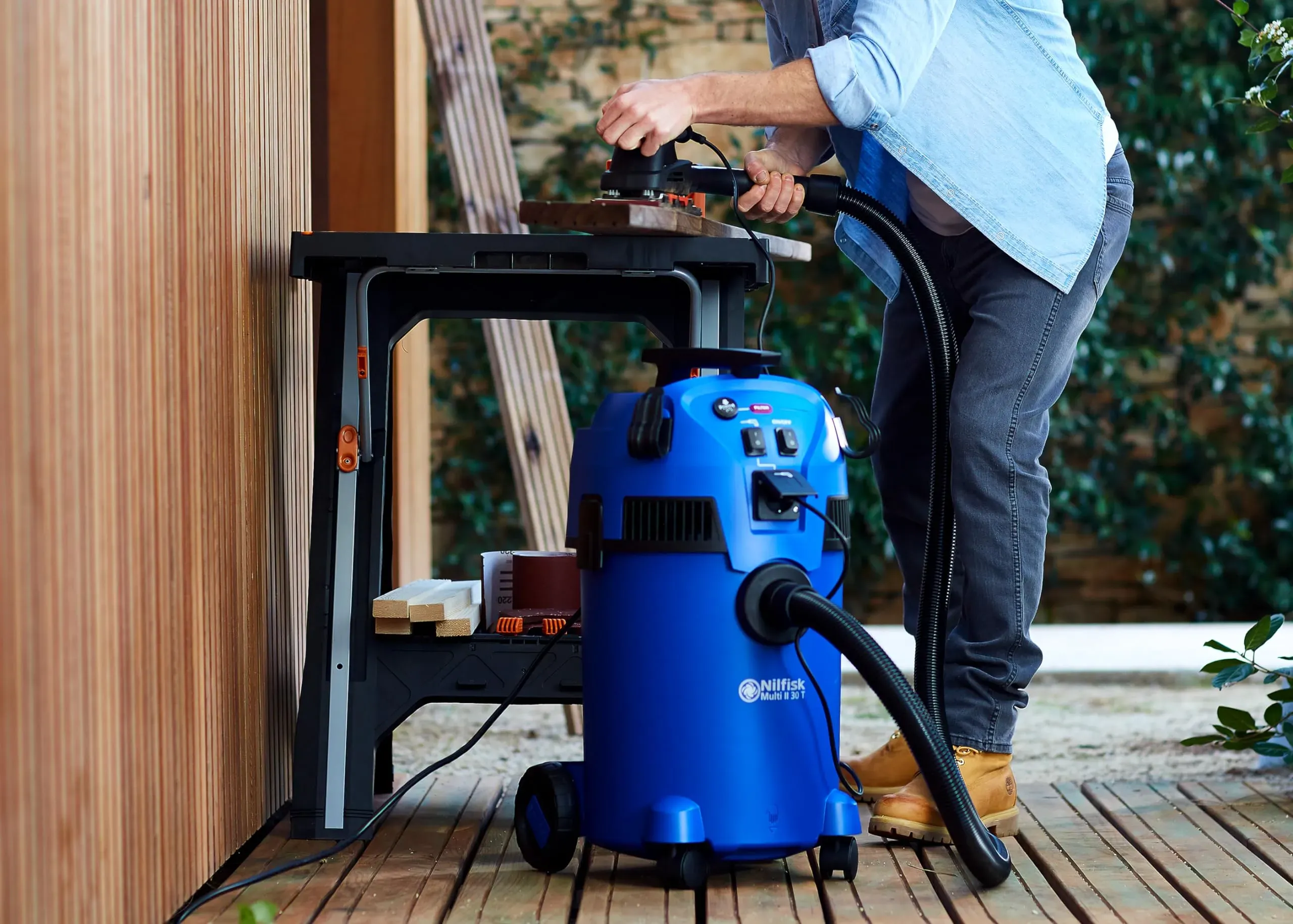
A critical feature for commercial and DIY users is the "Power Tool Take-Off" socket. This allows you to plug your sander or saw directly into the vacuum. When you turn the tool on, the vacuum starts automatically, and when you stop, it continues for a few seconds to clear the hose. This is arguably the most important feature for maintaining a dust-free workshop.
Wet safety and Filtration
This is non-negotiable. A true wet-capable unit must have safeguards such as float systems or electronic shut-off protection to prevent water from entering the motor. Additionally, ensure the filtration is appropriate; many UK trade sites now require L-class or M-class certified vacuums to meet health and safety regulations regarding fine dust inhalation.
Ready to handle the heavy-duty mess with {brand_name}?
Upgrade Your Cleanup — £165.82